Wednesday, November 6, 2013

Prepping for future activities to come


When I get bored, I usually end up listening to my favorite prime time shows from ABC & the CW online while checking out Teachers Pay Teachers for new freebies. It's one of my favorite way of procrastinating when I have a new material in the works. (Yes, I am working on another activity for my groups. I got halfway through before writer's block hit.) I found some really good stuff that I look forward to testing out with my groups over the next few weeks.

Monday, November 4, 2013

Thankful


Many SLP bloggers and TPT sellers are spending the month of November posting on Facebook about things they are thankful for in their lives. I love the idea of sharing what one is thankful for, but have no intention of filling everyone's facebook timeline with daily posts. It just gets old. So I will post it all in this post and let you read if you want.


1) My parents. They have supported me through thick and thin as I grew up and went to school. They even accepted me back home once I finally graduated so I can save up for a house. (Yes, I know there are tons of articles & news reports about how my generation is freeloading off of parents by moving back home after college. I think somewhere along the line, people have forgotten how different the economy is now in comparison to the way it used to be.)
2) The family pets. Over the summer, I mentioned that we lost two of our pets. It was a very hard time for me as I consider my pets to be people too. You can just look into their eyes and see their innocent souls shining through. I am very thankful for all of the good memories I have with my pets from childhood to the present. I am also glad that we have a new puppy in our lives that brings us much joy (despite the woes of potty training).
3) My excellent co-workers. I think that having good coworkers makes a huge difference in how happy a person is with their job. I am blessed to work with wonderful EC teachers everyday as well as a terrific team of SLPs. It is such a great learning environment. 
4) My friends. I don't get to see my friends from college & graduate school very often (if at all). However, I appreciate having those relationships even if the connection stays to facebook messages. Each one is incredible in her or his own right. 
5) My pedometer. I'm trying to track how many steps I take a day (working hard towards 10,000 steps) and this little guy makes life so much easier. It's taking a while for me to figure out what I need to do, but I am determined to start losing weight again.
6) Books. Life would not be the same without books and the incredible authors who write them. (Honestly, I would love to write a book.)
7) Education. Life-long learning is the best thing ever. 
8) Sweet potatoes. 
9) Music. There are few things better than zoning out to a good song.
10) Work. It's nice to make money.
11) Thrift stores. It's nice to save money and still get things that you love. 
12) Antique stores. There's just something about seeing items that people used to use all the time that makes me feel so impressed with humanity. Our imaginations can do and make some awesome things. It can also make some scary things too....
13) Movies. It's nice to take a break from reality.
14) Cell phones. 
15) Food. Cooking is such a great relaxing thing to do.
16) Internet. It's a great way to connect with SLPs across the globe, learn really cool things, and procrastinate on cleaning.
17) Pinterest. I get so many recipes from this site.
18) Blogging. It's not any easy thing to do, but I've really enjoyed having the ability to see how much I've grown as an SLP. 
19) Sharpies. They are a staple in my speech room.
20) ABC & the CW. These two networks got me through graduate school in one piece. 
21) Sandals. I could wear them every day for the rest of my life.
22) Jewelry. 
23) Chapstick. Appalachian really made me value the importance of avoiding wind-burn. 
24) Sweet tea.
25) Nature. There are so many beautiful things around us every day. 
26) Animals of all kinds. 
27) Our veterans and soldiers. They sacrifice so much to keep us safe.
28) Health. 
29) Medicine. 
30) Life. It's something so precious, but often taken for granted. 

Saturday, November 2, 2013

Because I've been on a DIY kick lately....

Craft sticks are really a gift from heaven (or whatever wonderful place you believe in). They hold endless possibilities as a tool for speech therapy. You can make Popsicle puppet people to work on following directions, turn them into a pick-up-sticks game, write vocabulary/parts of speech/articulation words on them, etc.....I love them even though some of my articulation students confuse them for the flavored tongue depressors we use to produce sounds in isolation correctly. (Many of my articulation students swear they taste exactly like suckers.)  


The jumbo colored ones are probably my favorite craft sticks of all. It's hard to find them so I recommend buying several packs. (Something I learned the hard way.) The bright colors are quite eye-catching and a great way to distinguish different targets. I decided to create an activity for my higher level articulation groups (loaded phrases/sentences). Students get to select a card to complete the sentences.

I broke the colors into minimal pair sets with 4 initial, 2 medial, and 4 final sound sticks for each sound. I wrote on both sides to get an extra bang for my buck.

This project can also be used to target carryover practice. The student(s) can develop their own story or conversation using the phrase as a topic starter. It's a fun way to let them use their creativity and inadvertently work on some language skills too.

 You could also use paint sticks if you have large handwriting.
I plan to store my stick collection in empty soup cans. I figure I'll have plenty of those sitting around once cold weather hits.

You can also make some general phrase sticks for open-ended practice. I took some smaller craft sticks from the Dollar Tree and wrote many of the phrases I use for 1 target phrase practice, such as "Do you see the...." and "Buy a new....". Again, the basic sticks can be used for activities that go beyond just articulation practice.


Recently, I purchased the Funny Flips books that were part of Super Duper's clearance sale to add in more amp up my advanced articulation groups' sessions.


I'm still a bit on the fence about these guys. My students love all of the goofy picture combinations and new word targets (2 years of the same artic decks can be a little boring). The boy's head with a girl's dress gets them every time. However, the names picked for some of the faces in the /k/ book are horrible! We've ended up inventing new names that are a bit more age appropriate for my younger students. The /sh/ book has a few names that are tough for my older students, but for the most part I just need to model those once. The Turn and Talk book is nice in terms of its format. I can just set it up to the right position and let my students tell me the words that they see. Some of the target words are a little odd, but it's a nice way to add variety to drills. It's also much easier than the constant card shuffle.

Wednesday, October 30, 2013

Looking beyond....

It's been an interesting week so far. I had a nasty stomach bug over the weekend and it's taken me until today to finally feel back to my usual self. As a result, I have been one very scatterbrained therapist these past two days and trying to play catch-up from my sick day. My students probably think an alien has taken over my brain. Then again, they're so excited about the prospects of reeling in a big haul of candy that nothing else really matters at this point. 

It seems like moods are running a little bit high at work this week. I got fussed at today for pulling a student on my normal day at my normal time. It's the first time that I've ever had to deal with this kind of reaction to me holding a group and it was a bit shocking. It was also a touch humiliating as the person made a small scene in front of a class of students. Hopefully, it's just pre-fall benchmark jitters and not something that will continue to occur. 

So to soothe my emotions and take a much needed mental vacation from all things Fall, I made this preposition activity. It's very similar to the spooky prepositions activity that I made for the Spooky Fun Frenzy. The file is black and white so students can color selected targets and to avoid the need of color ink. 

You can grab a copy of Snowy Prepositions here.

Saturday, October 26, 2013

That Old Lady is REALLY hungry.....


I imagine that most of you are getting pretty sick of the Halloween/Fall themed posts. Please forgive me for posting one last look at the season with my plans for the week......

I drew the items that the old lady swallowed from this story so my students can feed their own personal old ladies. They will color the lady and the creatures before we tape an envelope "stomach" to the backside of the lady pages. I made up my own set to use with my old lady tissue box.  
 I'm really proud of how well my free-hand sketches turned out. I've caught quite a few teachers at my school using their Smartboards to blow up pictures and trace them. One of the few benefits to not having a Smartboard is sharpening up your old artistic skills. You could also grab these free re-telling pieces.

The end results motivated me enough to make a set for the Old Lady who Swallowed Some Leaves. I haven't colored those ones in yet so they're not pretty enough to be shown.

 For my language groups that meet twice a week, I plan on spending the first day of therapy focusing on the Bat story. My students will use the second day to compare and contrast the two Old Lady stories using this free worksheet. They could not get over all the weird stuff she ate for Fall so I'm pretty sure the comparisons will bring out plenty of funny observations. The articulation groups who are at reading level will also get to join in on the fun with these activities.

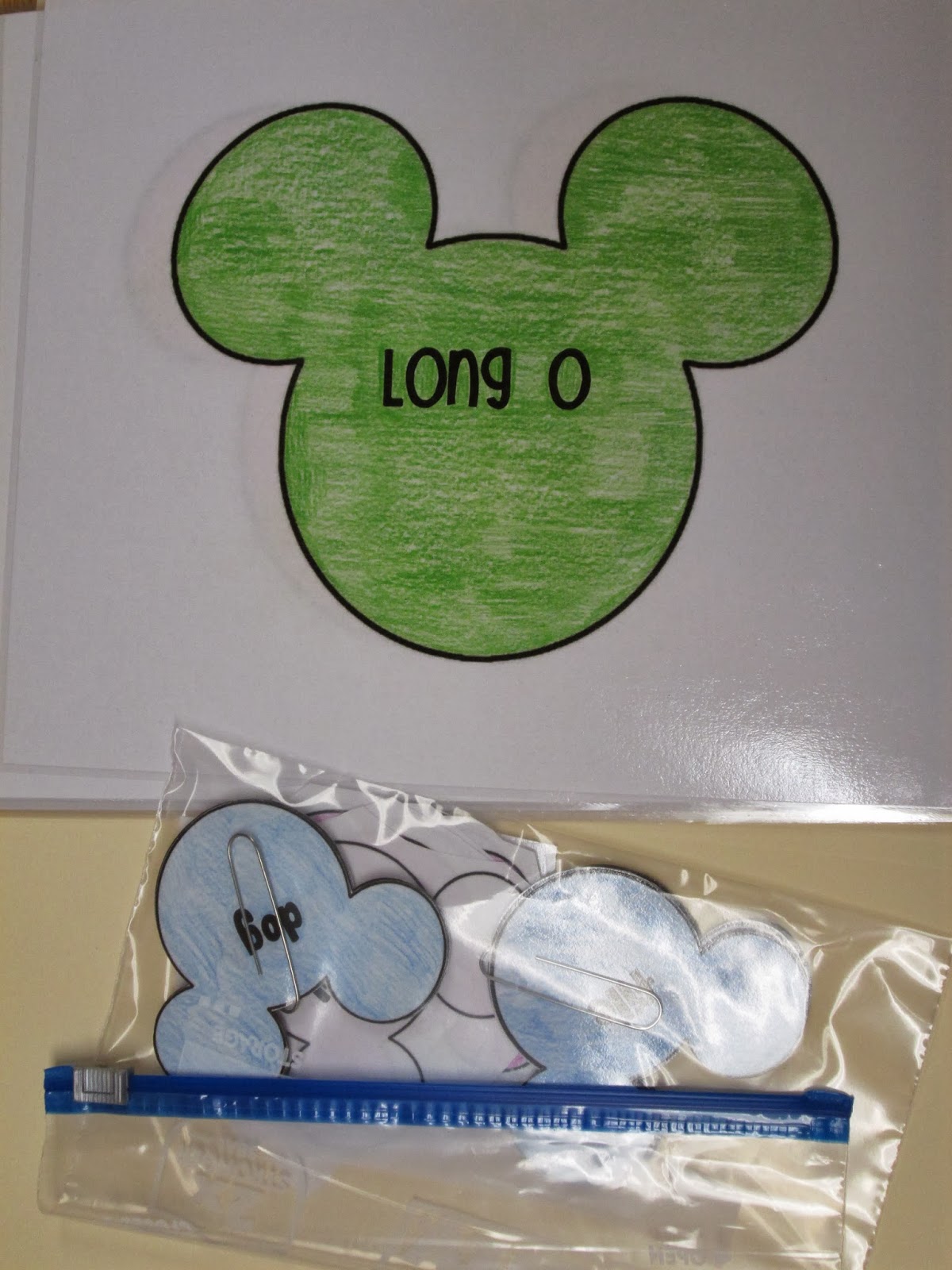
I also scooped up this fun vowel sort freebie for one of my lower articulation groups, morning remediation, and after-school tutoring groups. Let's hope the magic of Mickey Mouse and a fairy wand will make CVC words a bit more fun this week.


Wednesday, October 23, 2013

Rising to the Challenge: SLPs and Common Core

This is an updated re-post of a guest post that I wrote for Live Love Speech.

In preparation for the school year or other big events, I find it is a good idea to reflect upon tasks that you find challenging. It could be the ever daunting task of organization, efficient ways to bill Medicaid or arrange schedules, tackling Response to Intervention (RtI) concerns, or just surviving your first year as an SLP. The list could certainly go on and on depending on the topic...but I don't want you to feel overwhelmed by all of those possibilities. It's something that I fall prey to all too easily myself unless I take the time to really process through each concern. The largest of my concerns as a school-based SLP is to ensure that my therapy sessions compliment what my students are expected to do academically. 

It all boils down to the Common Core. The main idea of the Core concept is that students build their knowledge upon the foundation of the previous year(s) of education all the way back to what is started in kindergarten/pre-K. It shows us what typically developing children are expected to do within the classroom. In North Carolina, we also have Extended Content Standards for students with "Most Significant Cognitive Disabilities" that adapt the Core Standards to something more manageable. Oral language is a major component in the Standards (even the adapted ones) throughout the grade levels. This gives SLPs ample opportunity to collaborate with classroom teachers as we have a great amount of expertise that can assist them. They, in turn, can help us understand the objectives of their particular grade level (ie. giving us their lesson plans) since the Common Core doesn't have a specific curriculum. My summer training in Reading Foundations drove this point home. Our teachers are being taught the structure of language and how it impacts both reading and writing. I'm here to support them as they transition this new knowledge into practice this year. 

So how does this collaboration transfer to my therapy sessions?

Well, initially I use a set of teacher checklist forms created by the wonderful SLPs of Chapel-Hill Carrboro City Schools that align with the Core to demonstrate academic need during assessments. I find that this is a great foundation for me to use with results from standardized assessments in creating IEP goals. Once I have the IEP goals written from the point of the student's demonstrated needs, I can look at the Standards/Extended Standards to see if there's a correlation. You may not always have a correlation between the two depending upon the needs of the individual student and that's okay as long as you understand how it's impacting his/her academic performance. Once the IEP goals are agreed upon by the team, it is time to get down to business! 

Strategies: Talk to the classroom teacher to see what strategies work and don't work for the student in the classroom. If you know something that works well in therapy, work together to see that it gets implemented in the classroom too. Consistency is something that we all need no matter our age. I find that brainstorming with other staff members helps me learn new tactics for my "toolbox."

Make your lessons Systematic, Explicit, and Multi-sensory (SEM). This is advice they stress in Reading Foundations and I completely concur.  
  • Systematic- It all boils down to having a set plan which is your IEP. You are constantly assessing students based on their daily performance towards their goals in therapy. The IEP goals and recent data are used to develop the next therapy session's work. I find that this is easier for me when I use a monthly theme to target goals. Classroom teachers can give me their lesson plans so I know what topics they are covering and key vocabulary words for that unit. It's much more beneficial for students if you can provide extra repetition of these key concepts in another manner. That being said, even the best lesson plans can go awry so always try to be flexible too.   
  • Explicit- Explain what your expectations are for your students using words that they can understand. If they know what you want them to do, they will have an easier time of seeing a purpose in coming to speech. (Granted, you have to get them past the "games, games, games" stage.) I find that this is much easier with my older students. I can tell them that we're going to use a color coding system to help remember the parts of speech and that eventually they need to do it by themselves. My articulation students know what sounds they are working on and they write their own tallies to compare with mine. My students also know that I want them to learn and have fun in my classroom.
  • Multi-sensory- This is probably my favorite part of being an SLP. I love to do all kinds of wacky things and explore strategies to help my students learn as evident in many of my posts. My favorite thing is to use stuffed animals/puppets to bring basic concepts to life. I also love using songs/chants to help all of my students. You're never too cool for a catchy (yet goofy) tune. Will my students remember me after their "graduation" from elementary school? Probably not, but I know that there will be at least one random thing I did with them that they'll probably recall years from now.    
There's no rule that says we must make Common Core boring in our speech rooms. Learning should be fun for our students. 

Want some more information about the Common Core? Check out:


Monday, October 21, 2013

Turkey Talk. The emotions edition.

Some days, I just feel like this.......
If you saw me on Tuesdays and Wednesday mornings, you would definitely have to agree with this statement. It's probably from the back-to-back groups. It could also be from having a group of 4 boys that like to squabble with each other over everything. The talk card system I put into place is finally starting to pay off just a little. It is amazing how well losing a sticker for the day stays with them. I had one lose two cards last week, but the thought of losing the third card was enough to end the poor choices. It's the small things in life that truly mean the most. Since my younger groups are wrapping up the tail ends of their friendship journals, it is time for me to introduce our emotions in-depth and how our choices impact others' feelings.

I saw this pumpkin emotions game on pinterest that I absolutely love. The only problem is the fact that I don't have access to any baby wipe containers. So I had to adjust the activity to use materials that are readily available to me.
Pumpkin Emotions Game
I used one sheet of yellow poster board, one sheet of white poster board (for the face parts), one black sharpie, three sheets of red, yellow, and orange construction paper, and two sheets of brown construction paper. I drew the turkey and feathers free-hand onto the construction paper. You could also try using a template from a google search or Mailbox magazine. I taped the feathers and turkey body to the yellow poster board and had it laminated with the face parts.


The end result didn't come out too bad. Plus, I can use the face parts with other seasonal character posters, such as Santa or a leprechaun. We will talk about our feelings using Mr. Turkey and hopefully add in some role-play situations before Thanksgiving.

I also found another version that doesn't require all of the little pieces. You can easily use a die-cut to make these little guys.

Happy crafting!